
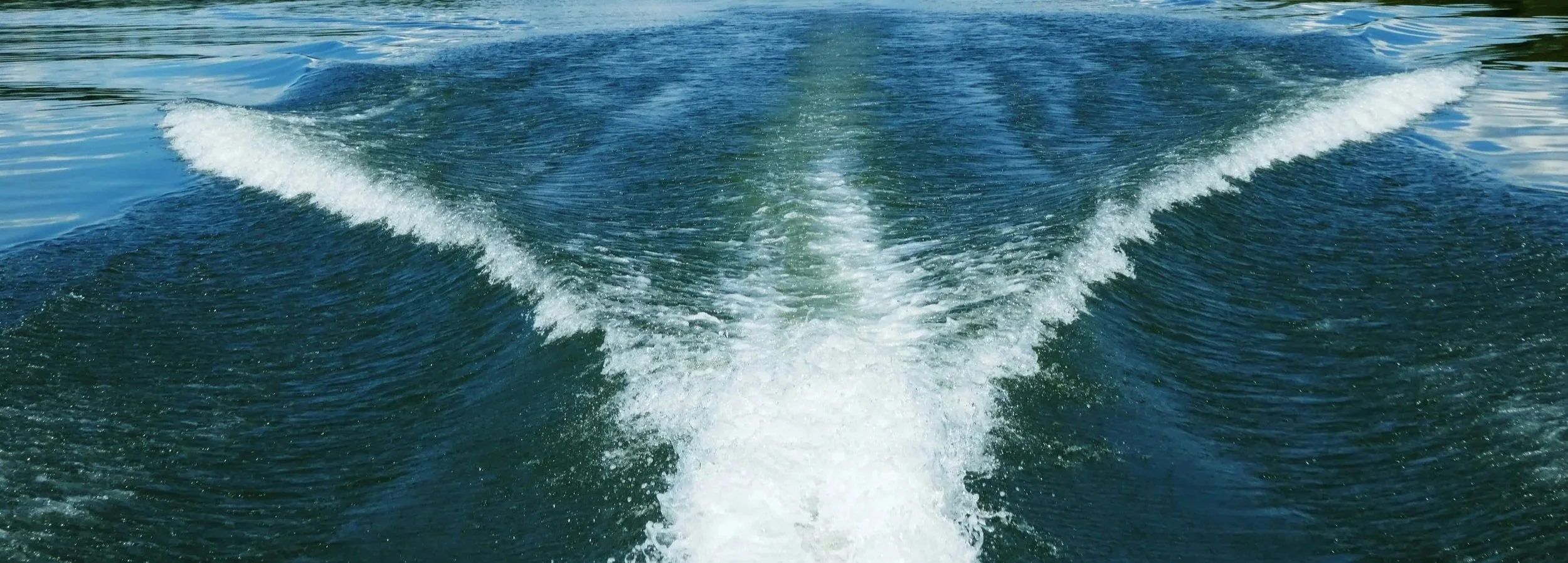
Wake Awareness 101
Understanding the environmental effects of wake boats
What’s different about wake boats?
• They have ballast tanks that can easily transfer aquatic species
• Wake boats effect sediment in shallow water
• Wake boats operate in a ‘bow high’ manner restricting visibility
• Large wakes can impact loon nesting and wildlife
• Wakes can create erosian and structural damage
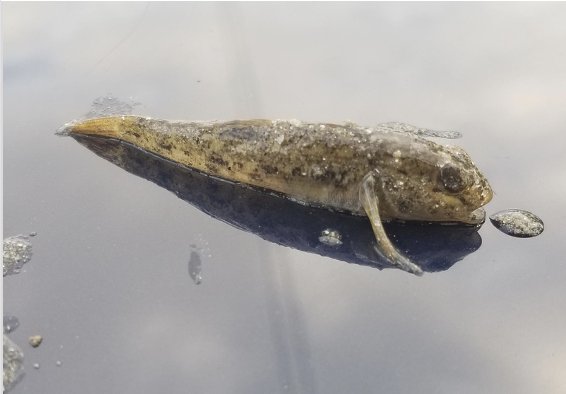
How ballast tanks work
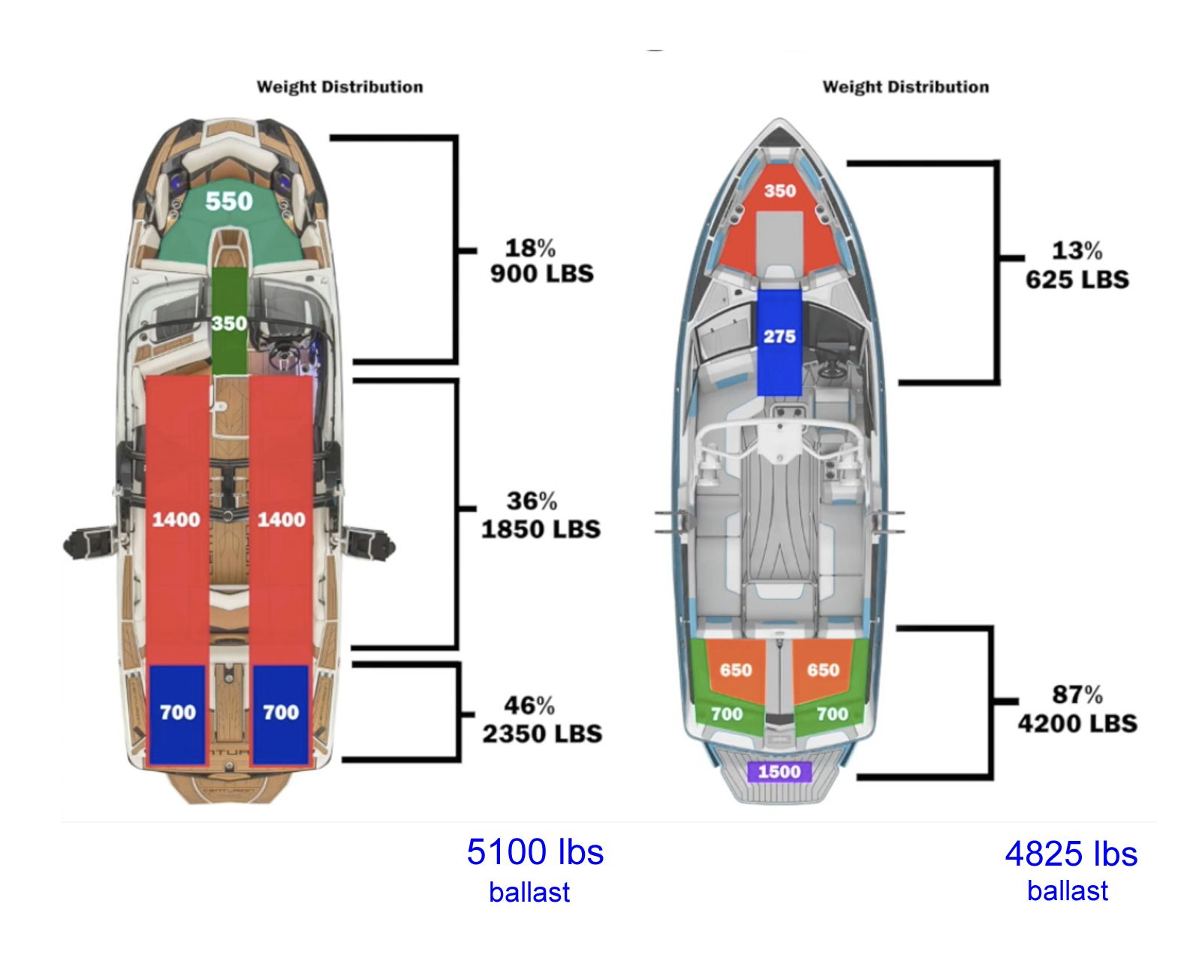
The ballast tanks are filled and discharged with water to enable certain performance characteristics to enhance wake creation .
• Large ballast tanks pump water in from lake, approximately 600-700 gallons.
• A recent study showed that after emptying tanks, between 10 and 50 gallons remain.
• Most ballast tanks have no access port for decontamination
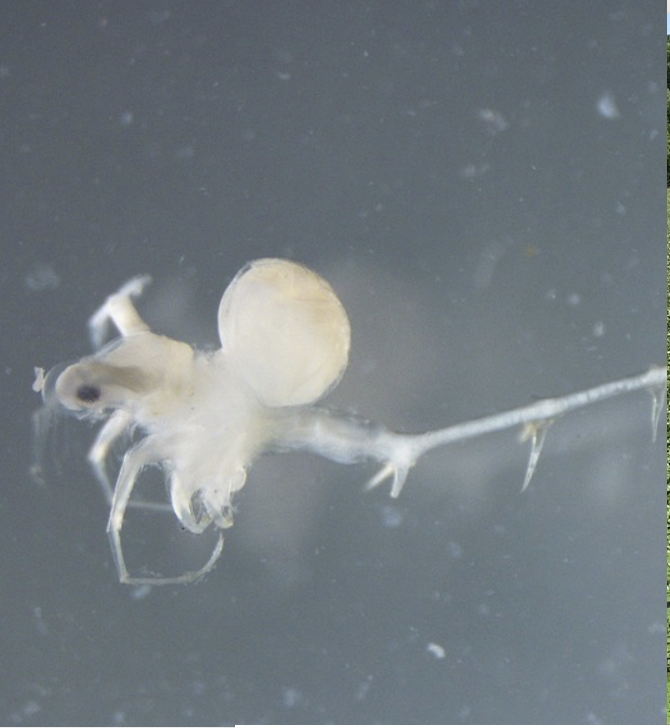
• If this process is repeated in follow-on lakes, the risk for releasing invasive fragments or larvae is very high.
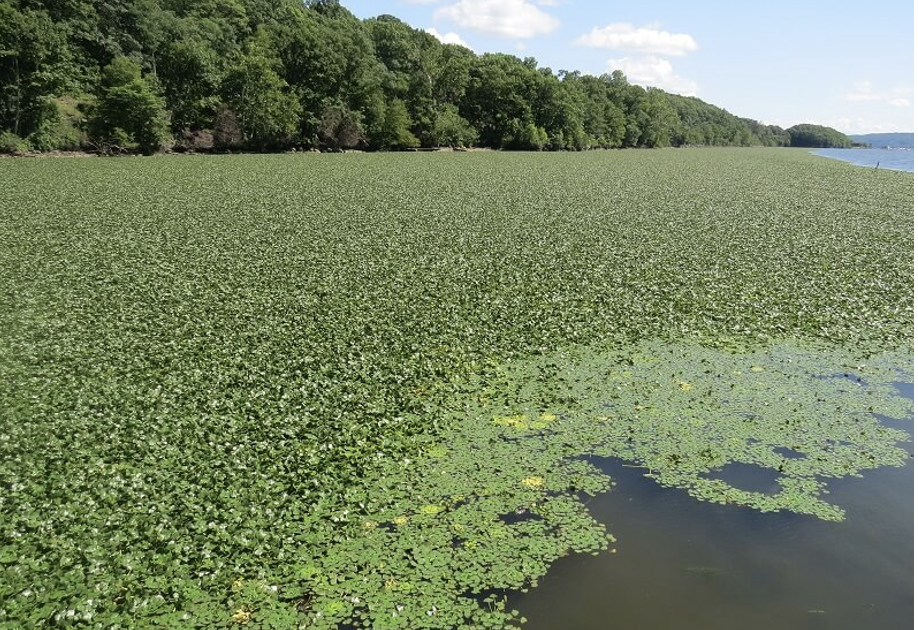
• E.g. – Lake Champlain has >50 aquatic invasive species, including water chestnut, round goby, hydrilla and spiny waterflea…
What you can do to prevent the spread of invasive species
• Empty your ballast tank in the lake before you leave
• Ideally, use your wake boat in the same lake all the time
• Always clean, drain and dry your boat

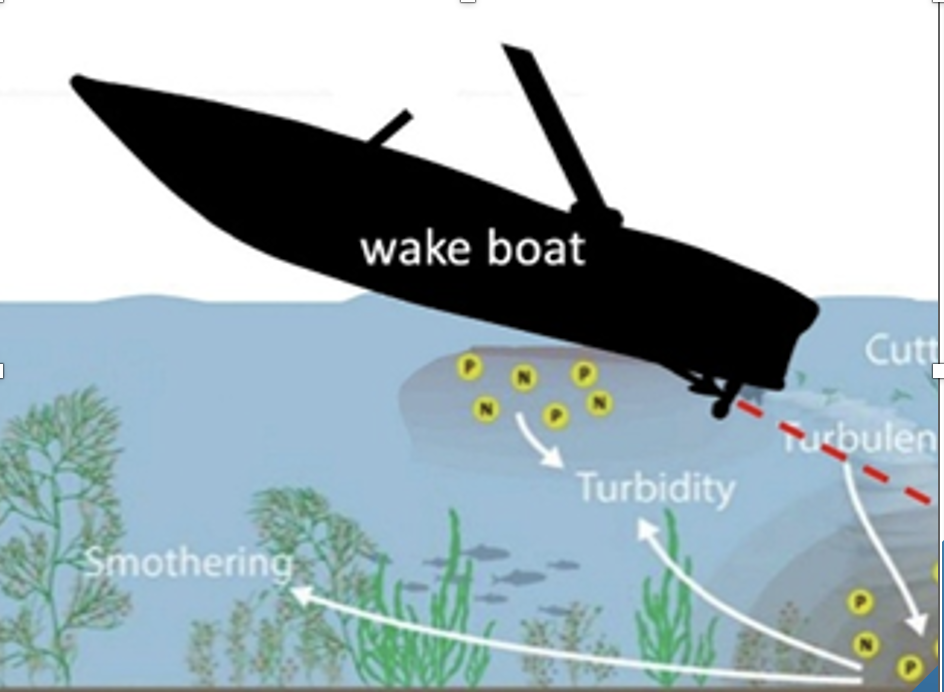
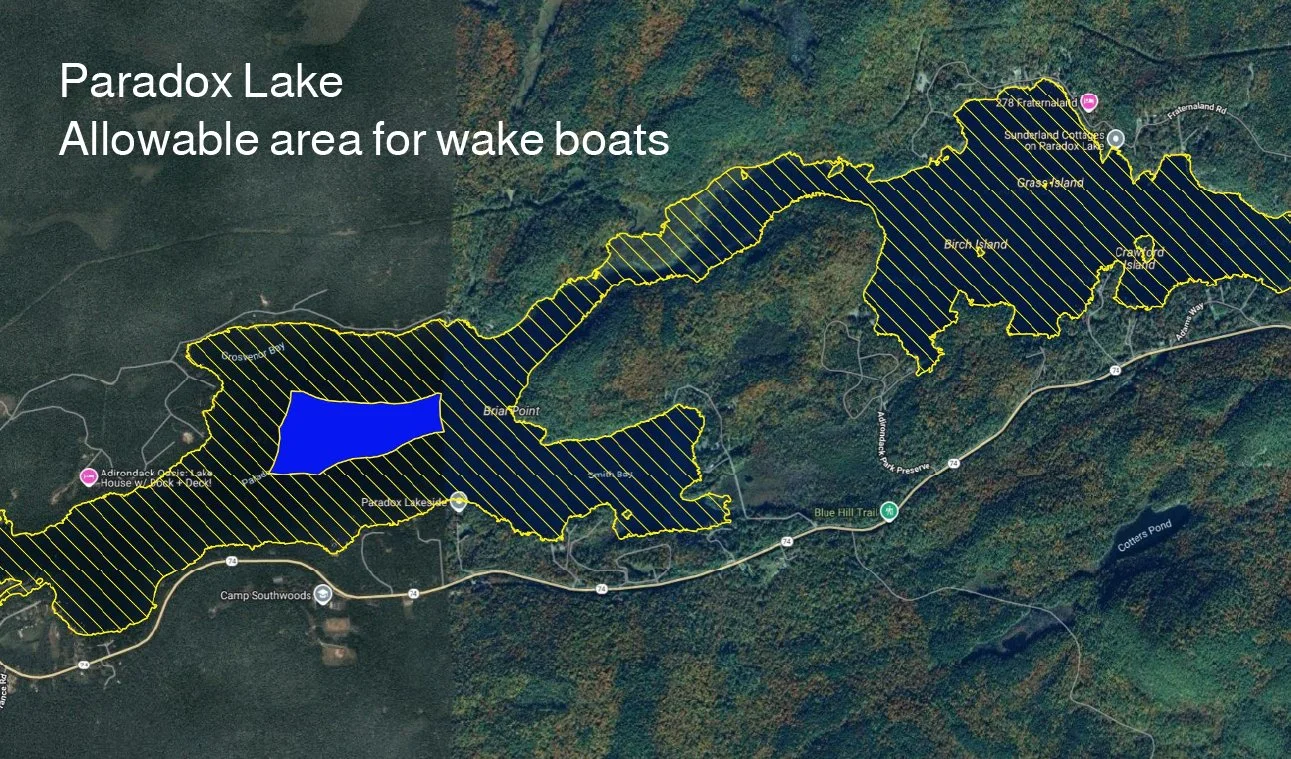
What happens under water
Bottom sediment disturbances occur
• Nutrients like phosphorous are stirred up into the upper water column
• Coupled with increased summer water temperatures, this creates the perfect environment for a harmful algal bloom (HAB) to form.
Below the surface
• Wakeboats can stir up sediments in waters shallower than 25 feet
• Underwater native vegetation and habitat disrupted – fish nests
• Decreasing water clarity - sediment resuspension
• Releasing phosphorus trapped in the lakebed
• Nutrient dispersion is linked to an increase in HABs
How you can protect the sediment
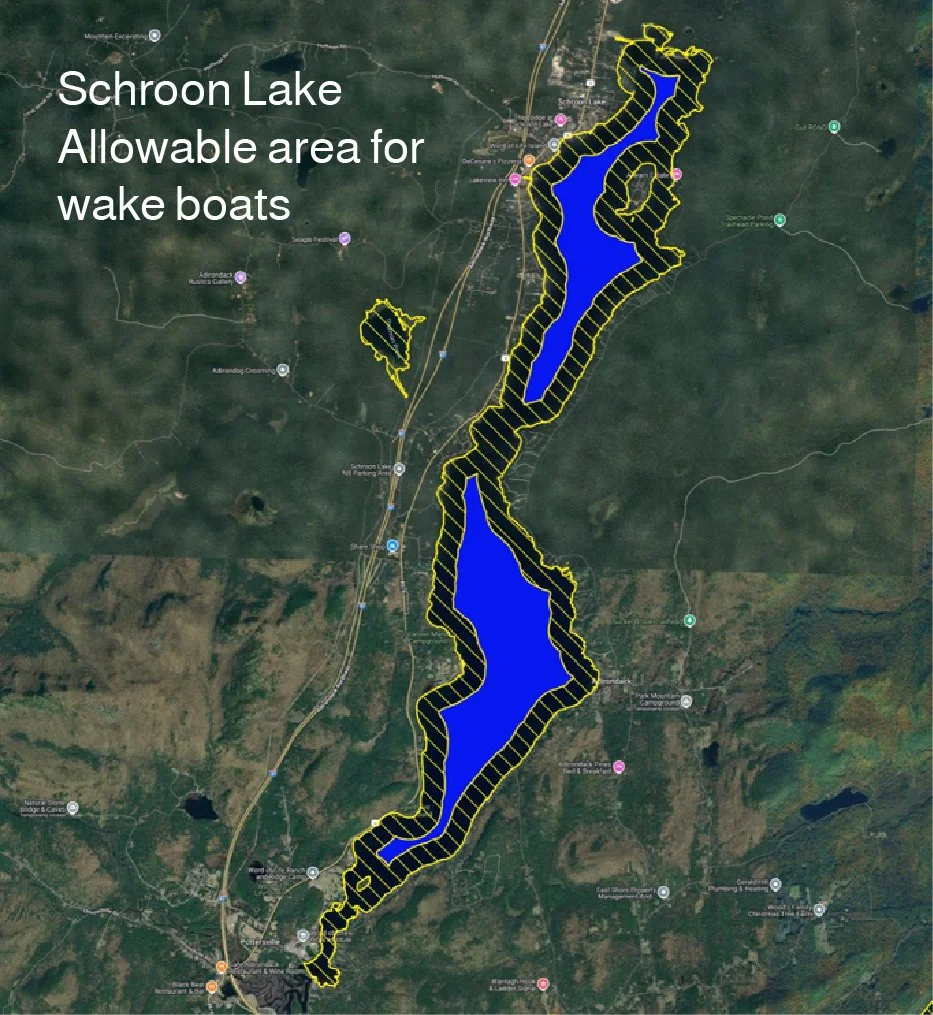
• Keep your watercraft at least 1,000 feet from a shoreline
• Boat in water that is at least 30 feet deep
• Boat in a water body that has at least 60 contiguous acres of surface water
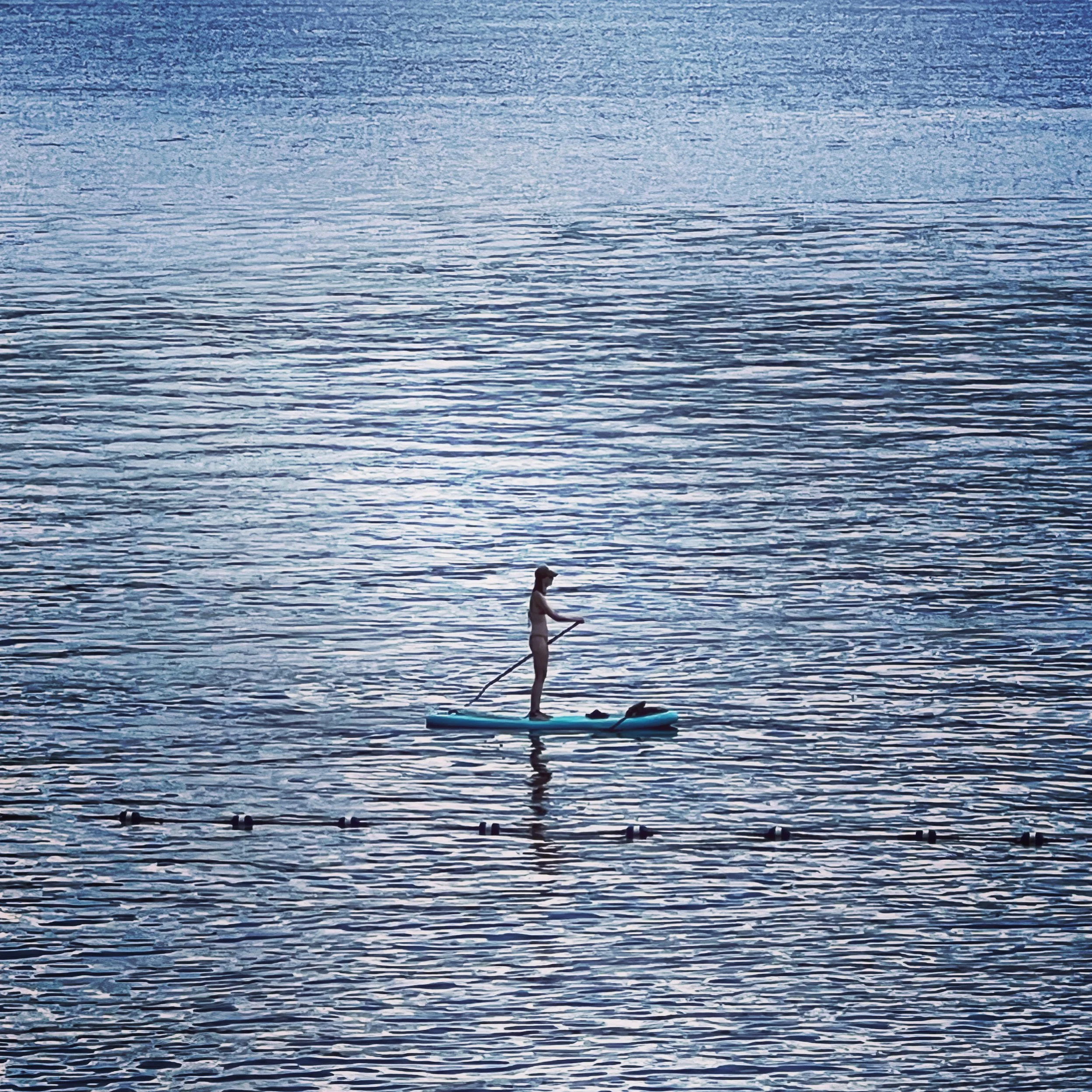
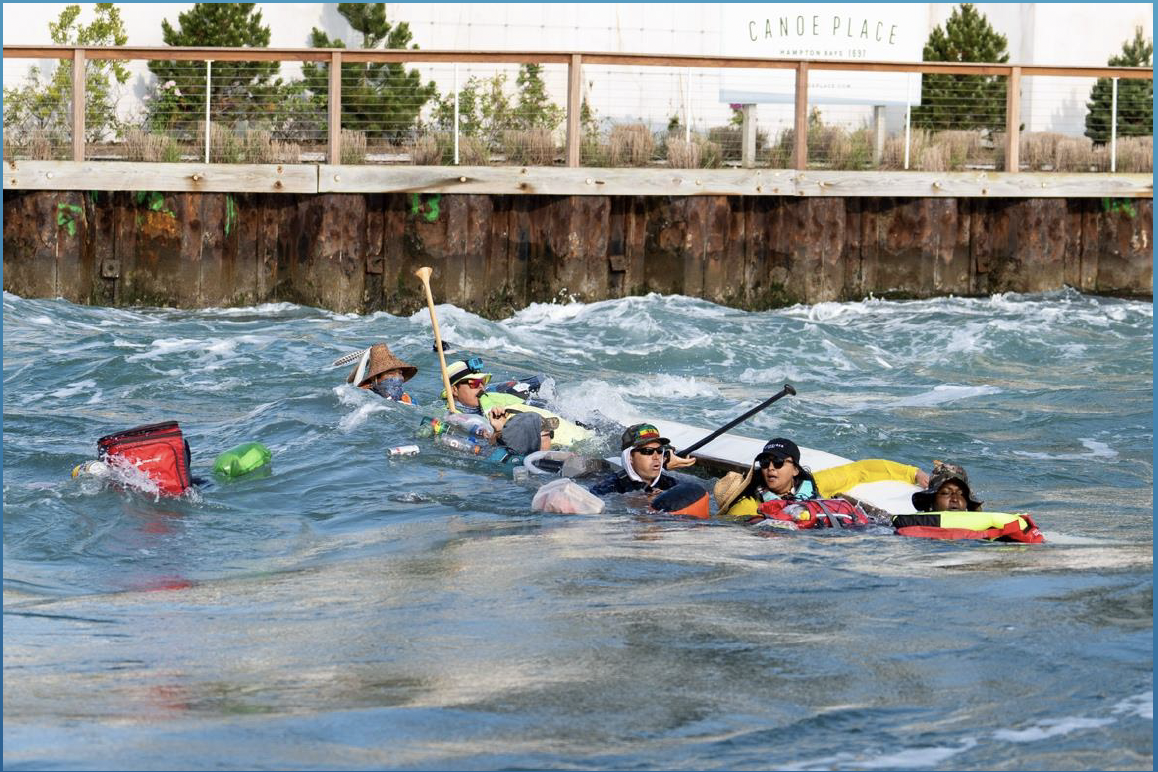
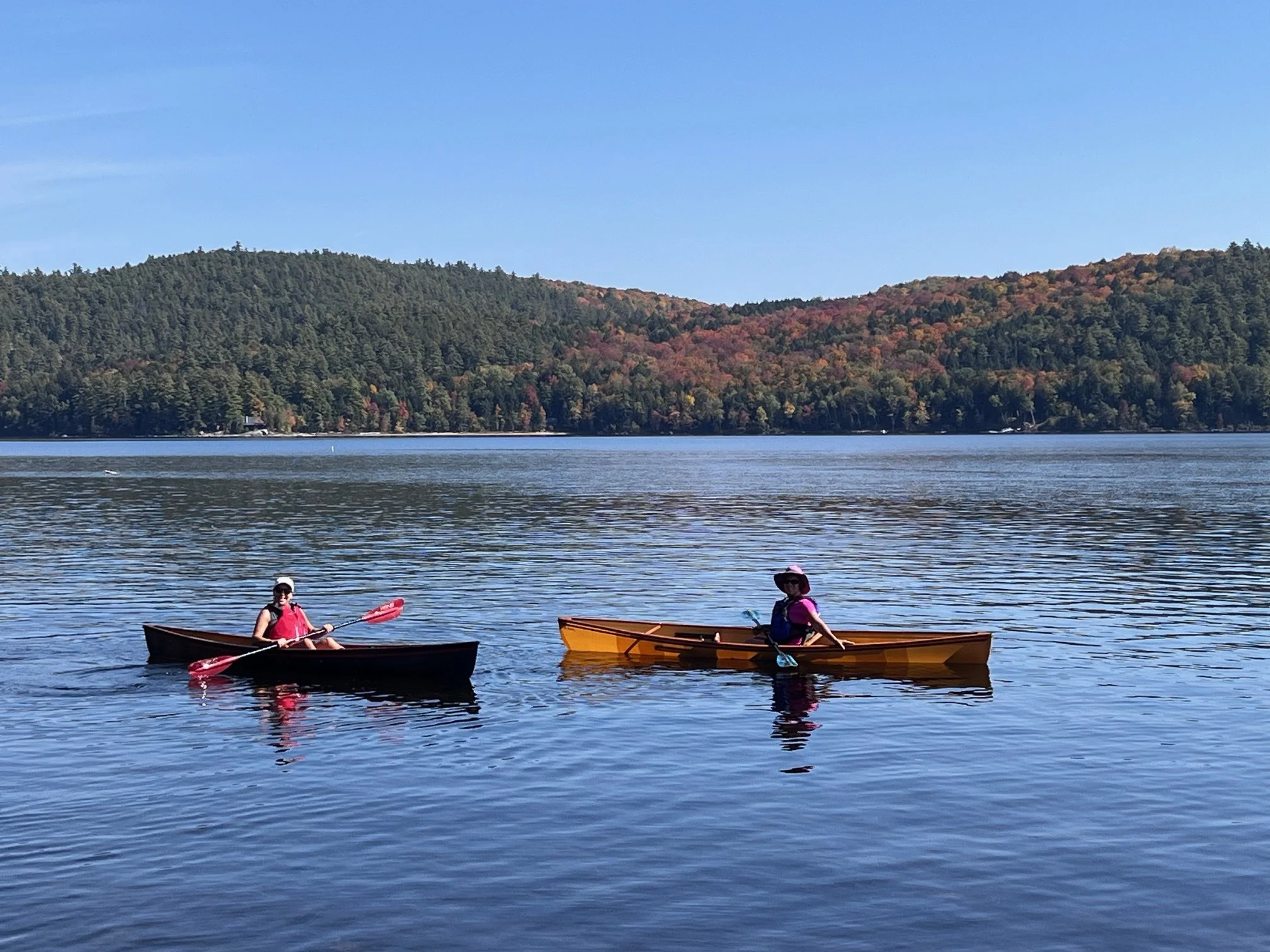
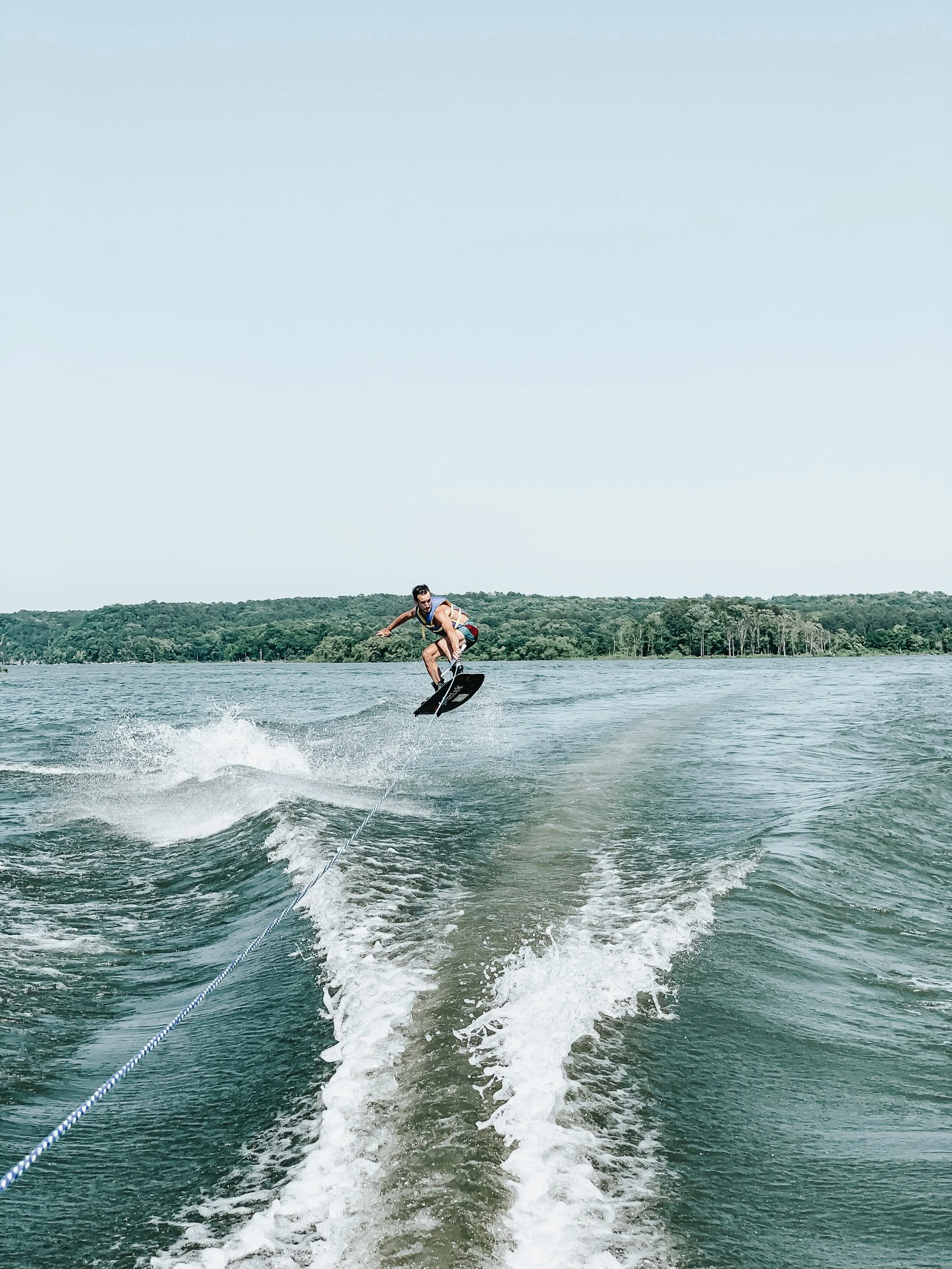
Fun can be dangerous
The impact on non-motorized boaters and swimmers
• Wake boats operate in a ‘bow high’ manner to generate the surfable wake
• This can restrict visibility of canoes and kayaks, and swimmers
• Swamping of smaller boats and fishermen also possible
Play it safe
• Always be aware of your surroundings and boat traffic
• Ensure that can see clearly while operating the boat