
The Lake Stewardship Program
Clean. Drain. Dry.
Follow these DEC guidelines before you get to the launch.
Clean any visible mud, plants, fish or animals before transporting equipment.
Discard materials in a trash can or at an invasive species disposal station; these stations have been installed at many boat launch sites for your convenience.
Do not wash or release material into a waterbody.
Some invasive species, such as zebra mussels, can be difficult to remove from a boat hull. They first need to be killed by water or steam that is 140°F, then they need to be removed by a brush or pressure washer. For help cleaning your boat and equipment, visit a decontamination station for a free boat wash.
Dump unused bait in trash cans and bucket water on dry land above the high water line, not in the water.
Drain all water holding compartments including ballast tanks, live wells, and bilge areas.
Drain your boat before you leave an access site.
Waterskis or wakeboards sometimes have ballast tanks; be sure to drain them.
Drain your live well if you have one.
Dry boats, trailers and all equipment before use in another waterbody. The most effective way to ensure that no invasive species or fish diseases are transported to a new body of water is to completely dry your boating and fishing equipment.
Drying times vary significantly depending on the type of equipment, air temperature, and relative humidity.
While the outside of a boat will dry relatively quickly, bilge, live wells, and other parts of a boat not reached by the sun or without good air circulation will take additional time to dry completely.
A minimum of 5-7 days drying time in dry, warm conditions is recommended.
About the Stewardship Program
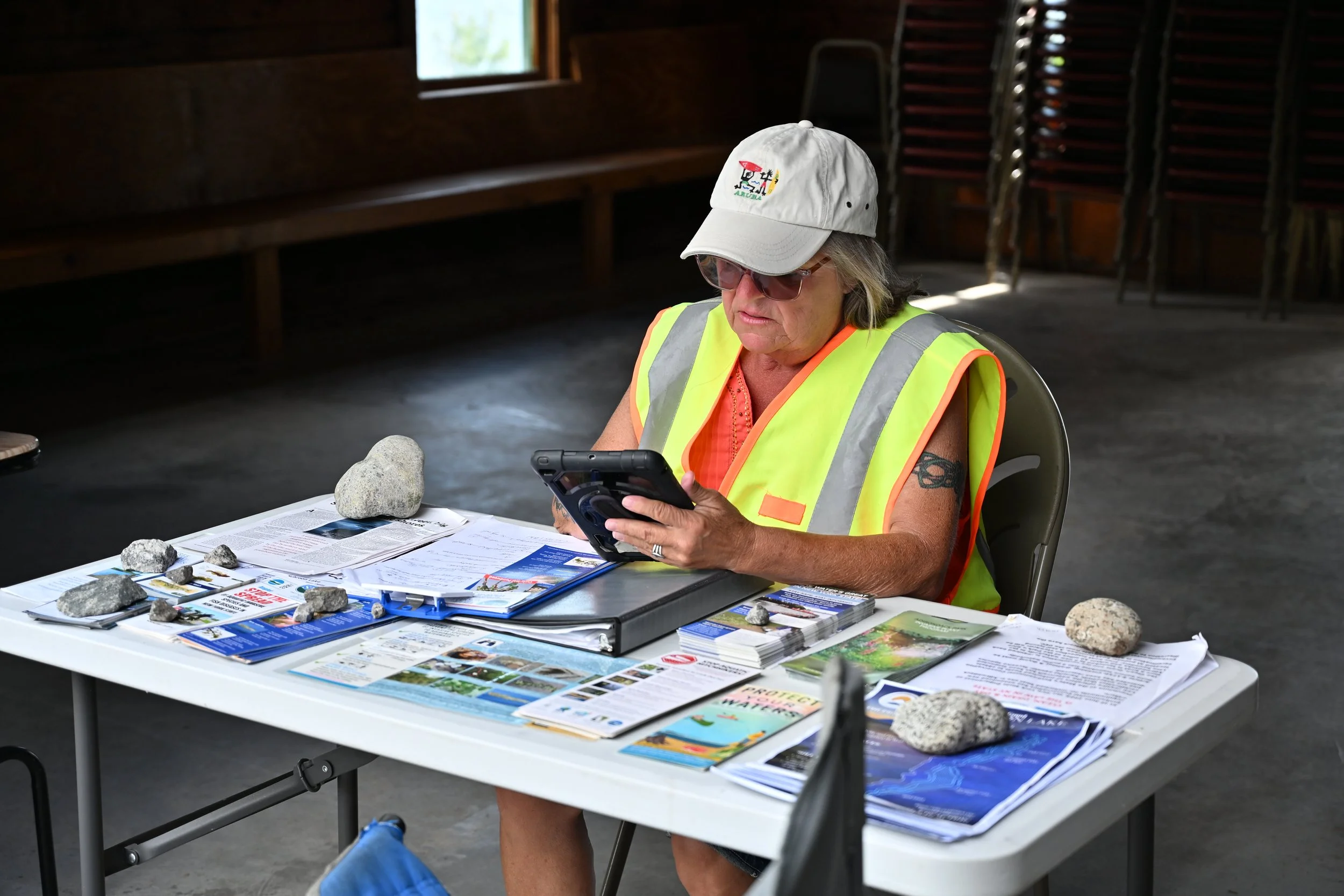
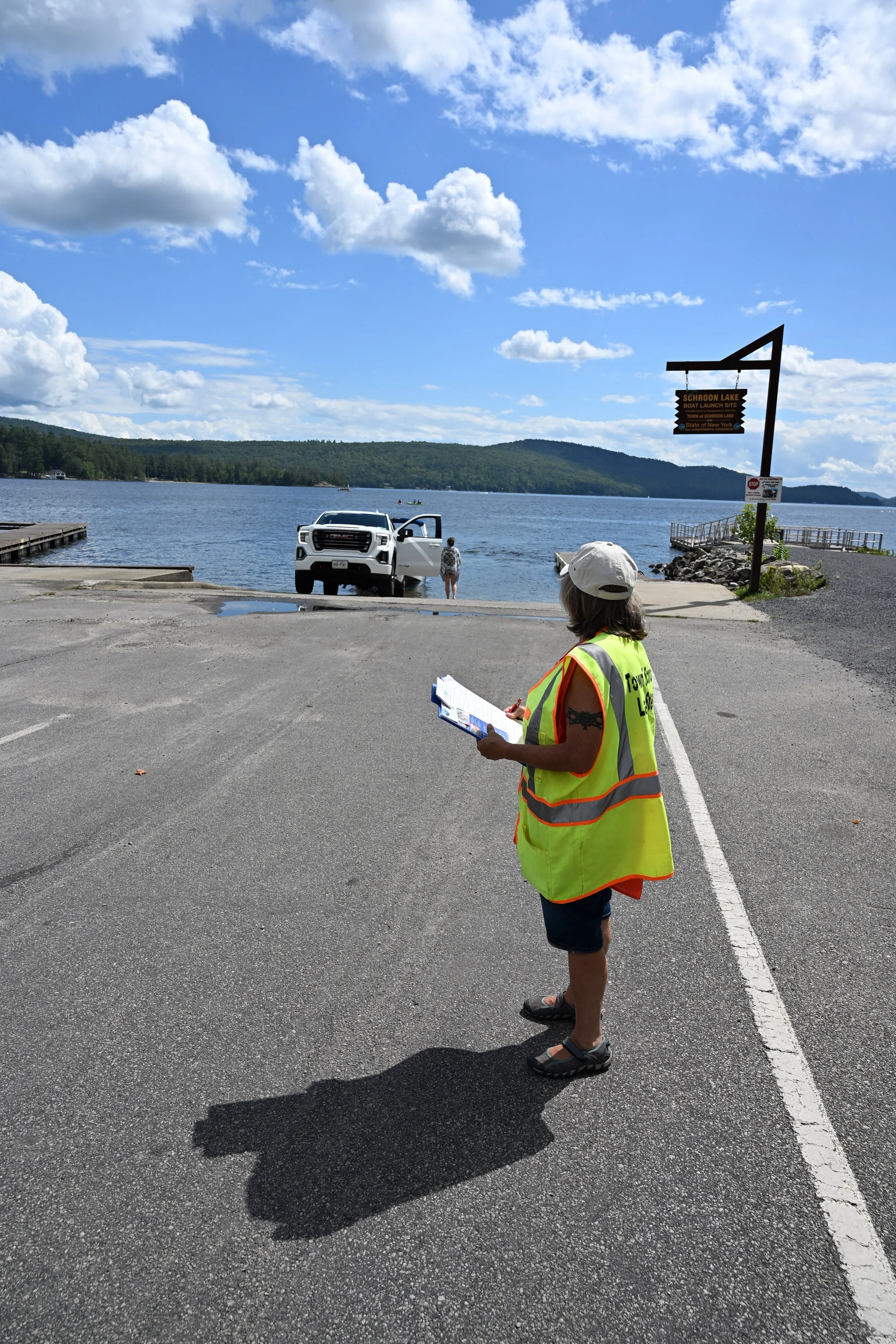
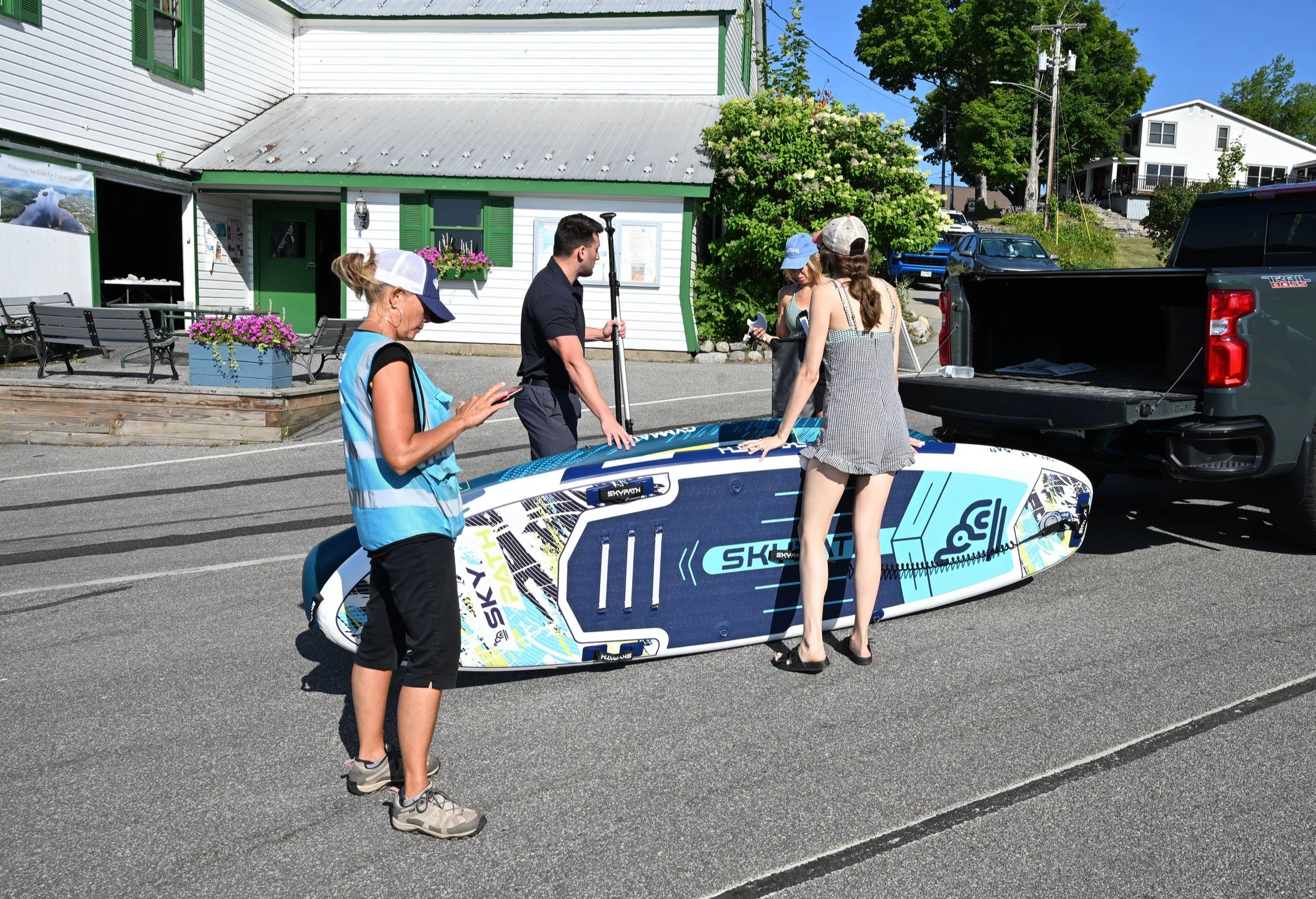
The Adirondack Watershed Institute (AWI) of Paul Smith's College operates the Watershed Stewardship Program, the primary line of defense against aquatic invasive species (AIS) in the Adirondack Park. Stewards are seasonal environmental professionals stationed at the over 60 boat launches and decontamination sites to inspect watercraft and educate the public on “Clean, Drain, Dry” protocols.
Program Overview
The mission is to prevent the introduction and spread of AIS, such as Eurasian watermilfoil and zebra mussels, which can degrade water quality and impact local economies. [1, 2]
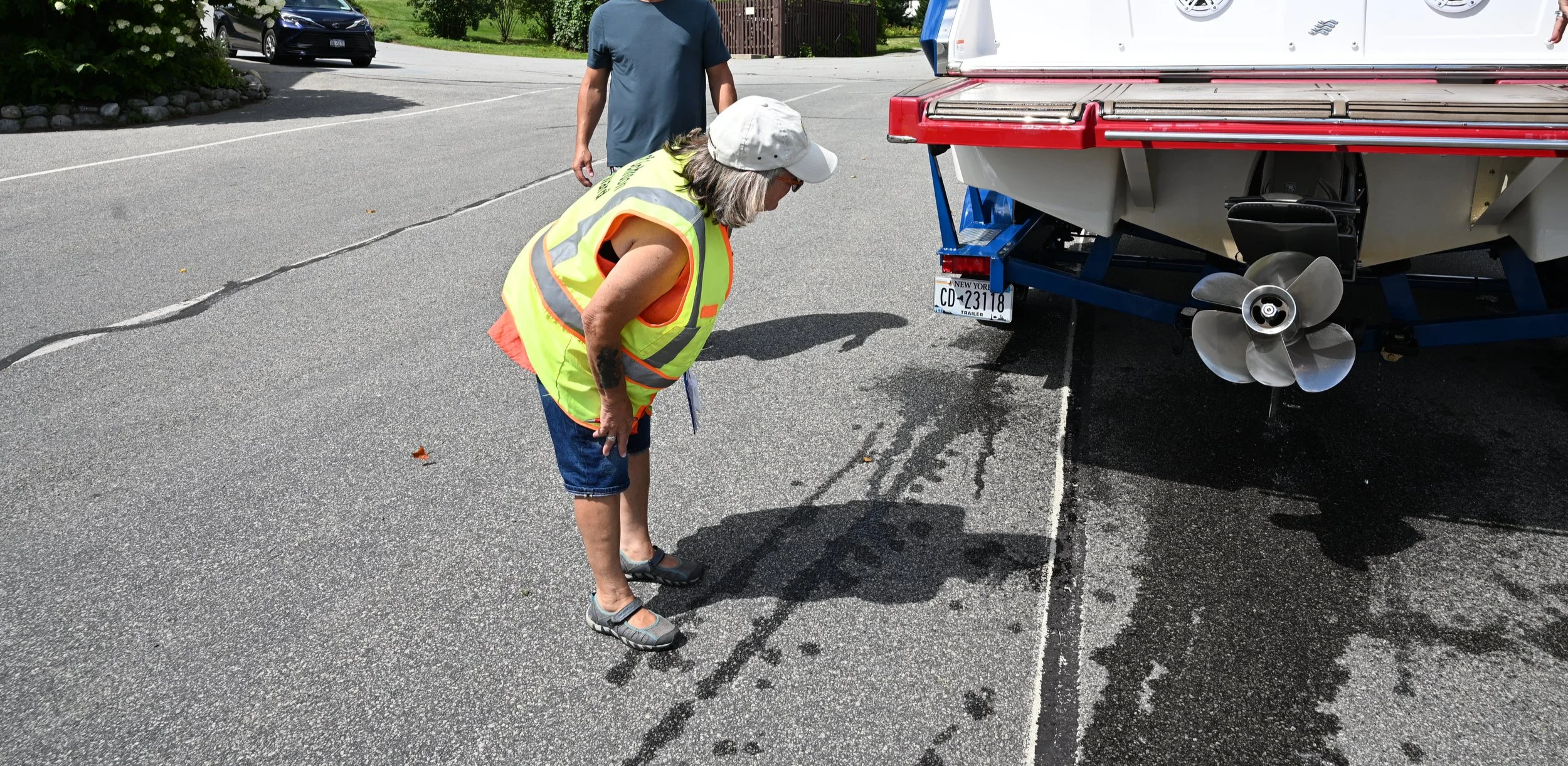
Boat Inspections: Stewards perform voluntary inspections of motorized and non-motorized vessels to remove plant fragments or animals before they enter or leave a waterbody.
Decontamination: In partnership with the NYSDEC, AWI operates free high-pressure, hot water wash stations to decontaminate high-risk watercraft.
Public Education: Stewards provide direct outreach to boaters, explaining the ecological and economic risks of invasive species.
Data Collection: They record information on vessel types and previous waterbodies visited to help researchers track high-risk spread pathways.
NOTE: The Town of Schroon and SLA provide additional hours of stewardship as needed.
What to expect at the launch.
-

Upon arrival at the launch a lake steward will do a boat Inspection and look for invasive species that might be attached to the boat or trailer. After a visual inspection, anything unusual will be photographed and sent to AWI for further evaluation. The steward will also note cleanliness of equipment on the boat and any water left in the wells or bilge.
-

The lake steward will then fill out a survey, asking the boat owner to answer some questions. For example:
• Has your boat been in any other body of water in the last 2 weeks?
• What lake was your boat last in?
• Did you have your boat washed?
This information assists the lake steward in determining the risk of microorganisms or invasive species entering our lake. If all prevention steps have been followed the boater launches.
-

Collected data is sent directly to The Adirondack Watershed Institute (AWI). This information will be used for the protection of our lake and the entire Adirondack Watershed.
-
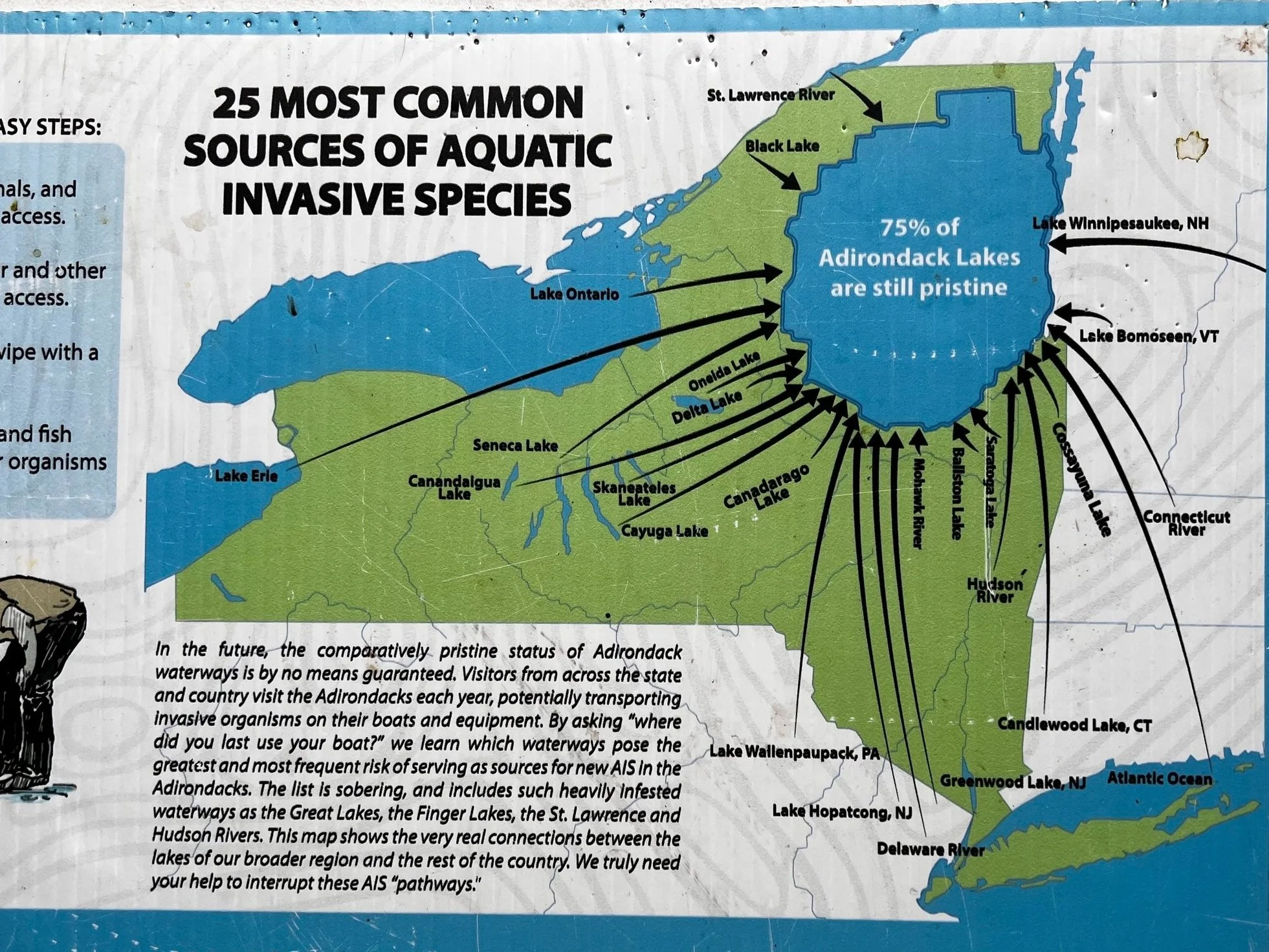
AWI data then informs all the different lake communities of invasive species activity and provides information to the state of NY for a larger scale of lake protection.